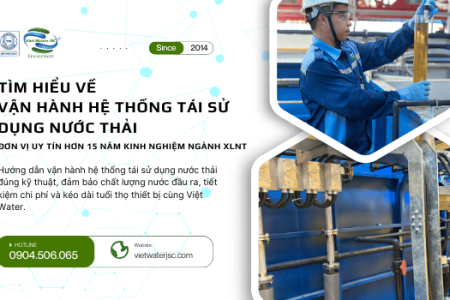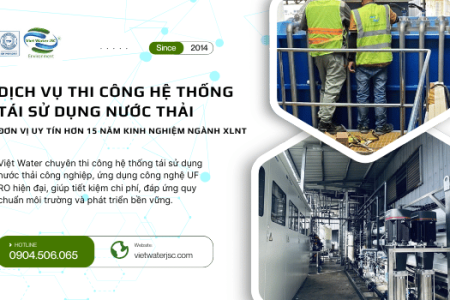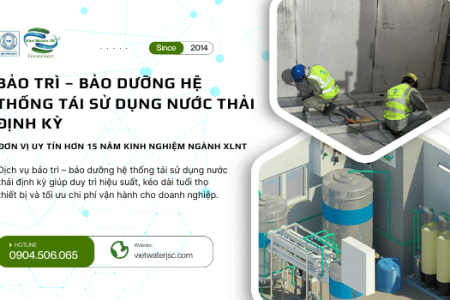
Maintenance and servicing of wastewater reuse systems are not optional—they are essential for ensuri...
Upgrading wastewater reuse systems
Upgrading Wastewater Reuse Systems
A Strategic Solution for Water Efficiency and Sustainable Development
Rapid socio-economic development has placed increasing pressure on surface water and groundwater resources. In many industrial facilities, treated wastewater that already meets discharge standards is still discharged, while companies continue purchasing freshwater at rising costs. As a result, upgrading wastewater reuse systems has become a practical and forward-looking solution to conserve water resources, reduce operating costs, and protect the environment.
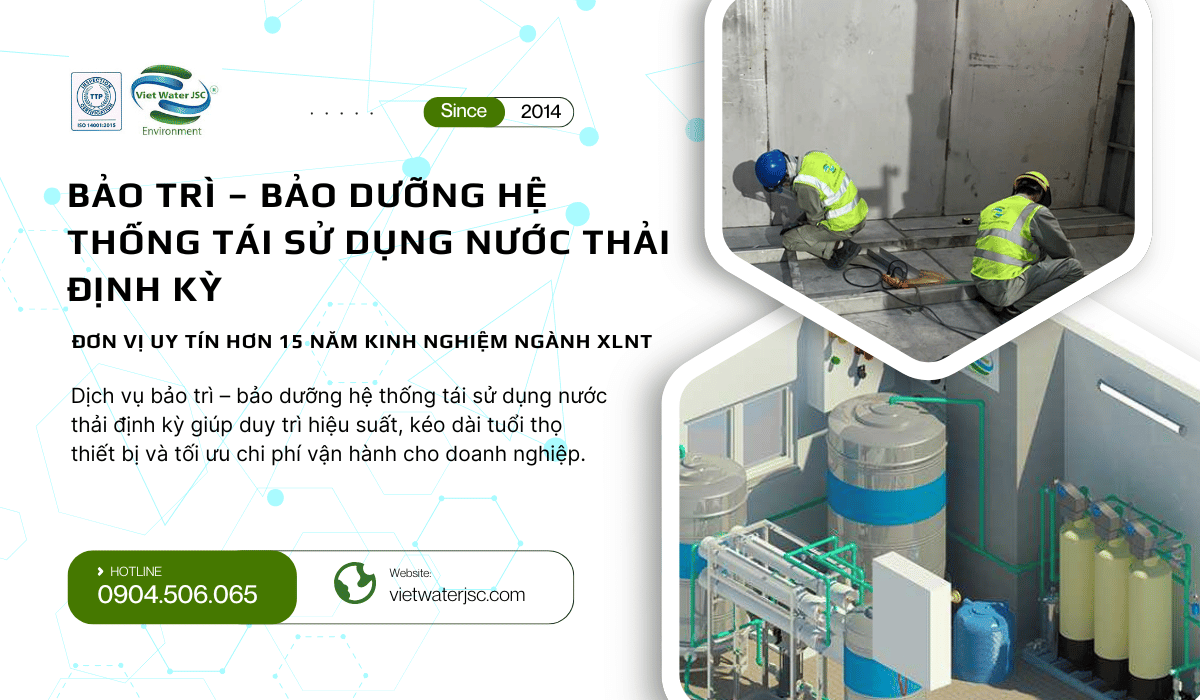
This SEO-optimized article presents a comprehensive overview of wastewater reuse system upgrades, based on real project experience from Việt Water JSC.
1. Upgrading wastewater reuse systems – A global trend
Around the world, wastewater reuse is no longer optional but essential:
-
Approximately 32.1% of reclaimed water is reused for agricultural irrigation
-
About 6.39% is reused for recreational and landscape purposes
-
Countries such as Singapore, Israel, the United States, Australia, and Namibia have integrated wastewater reuse into national water strategies
In water-scarce regions like Israel and the Middle East, up to 70% or more of municipal wastewater is reused. China has also developed large-scale urban wastewater reuse plants, supplying hundreds of thousands of cubic meters per day for industrial and agricultural applications.
In Vietnam, wastewater reuse is still often limited to partial system capacity due to investment constraints. However, upgrading existing treatment systems for reuse is rapidly emerging as a key solution, especially in industrial zones and FDI projects.
2. Why upgrade existing wastewater reuse systems?
Most existing wastewater treatment plants were designed mainly for:
-
Compliance with discharge regulations
-
Not for water reuse purposes
By upgrading wastewater reuse systems, enterprises can achieve:
-
Significant reduction in freshwater purchase costs
-
Lower wastewater discharge and environmental fees
-
More stable and secure water supply for production, cooling, and cleaning
-
Maximum use of existing treatment infrastructure
-
Alignment with circular economy and ESG strategies
Compared with building a new system from scratch, upgrading usually requires only 40–60% of the investment cost, while delivering strong economic and environmental benefits.
3. Regulatory standards for wastewater reuse in Vietnam
Upgrading wastewater reuse systems must comply with relevant standards depending on the reuse purpose:
-
QCVN 02:2009/BYT – limited domestic and utility reuse
-
QCVN 08-MT:2015/BTNMT – irrigation and landscape reuse
-
Internal corporate or group standards, especially for FDI enterprises
Clearly defining the reuse objective is critical to selecting the right technology and avoiding unnecessary over-investment.
4. Key technologies used in wastewater reuse system upgrades4.
1. MBR (Membrane Bioreactor)
-
Combines biological treatment with membrane filtration
-
Produces high-clarity effluent with low TSS
-
Suitable for reuse applications such as:
-
Landscape irrigation
-
Factory cleaning
-
Floor and road washing
-
MBR is commonly used to upgrade conventional biological treatment systems.
4.2. Nano Filtration (NF)
-
Membrane pore size: 1–10 nanometers
-
Removes organic compounds, heavy metals, and reduces hardness
-
Suitable for applications requiring higher water quality than MBR alone
-
Performance depends on pressure, temperature, and salinity
4.3. Reverse Osmosis (RO)
-
Extremely fine membrane separation
-
Removes dissolved salts, microorganisms, and most contaminants
-
Enables reuse for:
-
Industrial processes
-
Cooling systems
-
Equipment washing
-
For high-quality requirements, RO can be combined with EDI and UV disinfection.
Note: Reclaimed water is not recommended for direct drinking purposes.
5. Wastewater reuse system upgrade process at Việt Water JSC
Việt Water JSC follows a structured upgrade approach:
-
Site survey and assessment of the existing treatment system
-
Water quality analysis after current treatment stages
-
Definition of reuse objectives and target reuse ratio
-
Selection of appropriate upgrade technologies (MBR, UF, NF, RO)
-
Integrated construction with minimal production disruption
-
Commissioning, optimization, and operator training
6. Economic and environmental benefits of system upgrades
Upgrading wastewater reuse systems delivers measurable results:
-
40–60% reduction in freshwater consumption costs
-
Significant decrease in discharge fees
-
Typical payback period of 3–5 years
-
Reduced pressure on natural water resources
-
Lower environmental impact and improved sustainability performance
7. Việt Water JSC – Trusted partner for wastewater reuse upgrades
With extensive experience in water and wastewater treatment, Việt Water JSC provides turnkey solutions:
-
Consulting and design for wastewater reuse system upgrades
-
Integration of MBR, UF, NF, and RO technologies
-
Operator training and long-term maintenance support
-
Optimization of CAPEX and OPEX
Learn more about our solutions here:
👉 WASTEWATER REUSE SYSTEM
Conclusion
Upgrading wastewater reuse systems is not only a technical improvement but a long-term economic and environmental strategy. By reclaiming treated wastewater, enterprises can reduce costs, conserve water resources, and strengthen their sustainability profile.
With proven engineering expertise and practical project experience, Việt Water JSC is ready to support enterprises in upgrading wastewater reuse systems that are efficient, compliant, and future-ready.